
Designed at every scale.
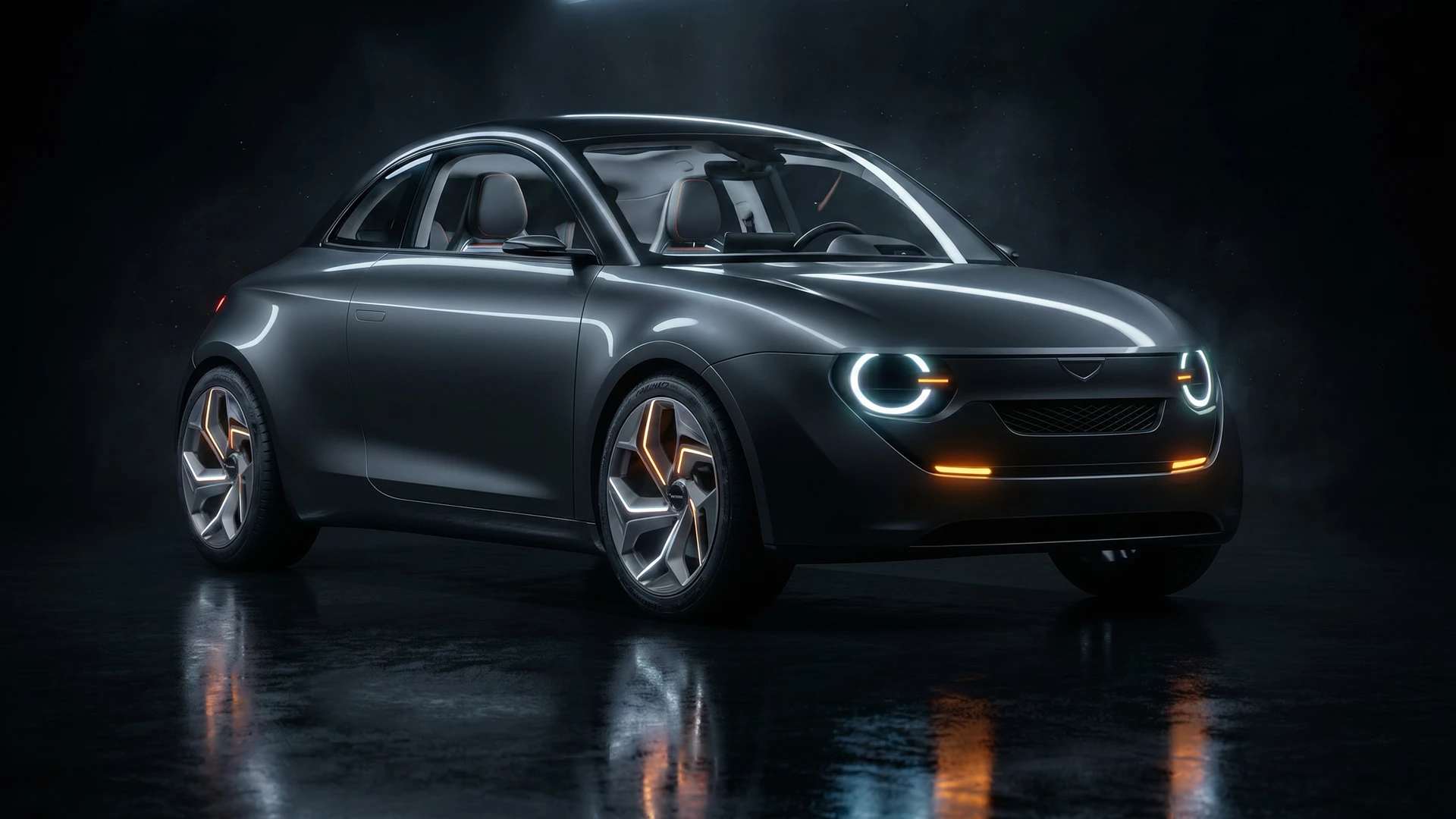
ARCON is a compact two-door electric coupe concept for the urban young earner, designed from the inside out, and the app inward. One design language, repeated at every scale from a 19-inch wheel to a 6-inch phone display.
Most EVs are engineered products with design applied on top.
The brief was deliberately difficult: design a compact EV that competes emotionally with the Mini Cooper SE and Volvo EX30, but speaks to an Asian urban buyer who finds those references too European, too nostalgic, or too limited in their digital ambitions.
The target owner is the generation buying their first premium vehicle in Bangalore, Mumbai, Bangkok, or Shanghai. Not a family car. Not a status symbol from an older generation’s taste. A machine sized for city blocks, priced for ambition, and designed to feel like a single coherent object, whether you’re looking at it in a parking basement, sitting inside it, or checking on it from your phone at midnight.
The real design question was not what the car should look like. It was how a single design intelligence could live simultaneously in the vehicle’s body, its cabin, its instrument cluster, and its companion app, so that the owner never experiences a seam between the physical object and the digital one.

One gesture. Every surface. Every scale.
The arc is the project’s core design decision, made once and applied everywhere. It defines the circular halo headlights with their amber DRL interrupt, expressive without being aggressive. The same arc reappears in the alloy spoke pattern, in the taillight cluster, in the charging progress ring in the companion app, and in the instrument cluster on the in-car screen. At every scale, from a 19-inch wheel to a 6-inch phone display, the same geometric logic is doing the same job: orienting the user, communicating status, and making the system feel like it was made by one mind rather than assembled from parts.
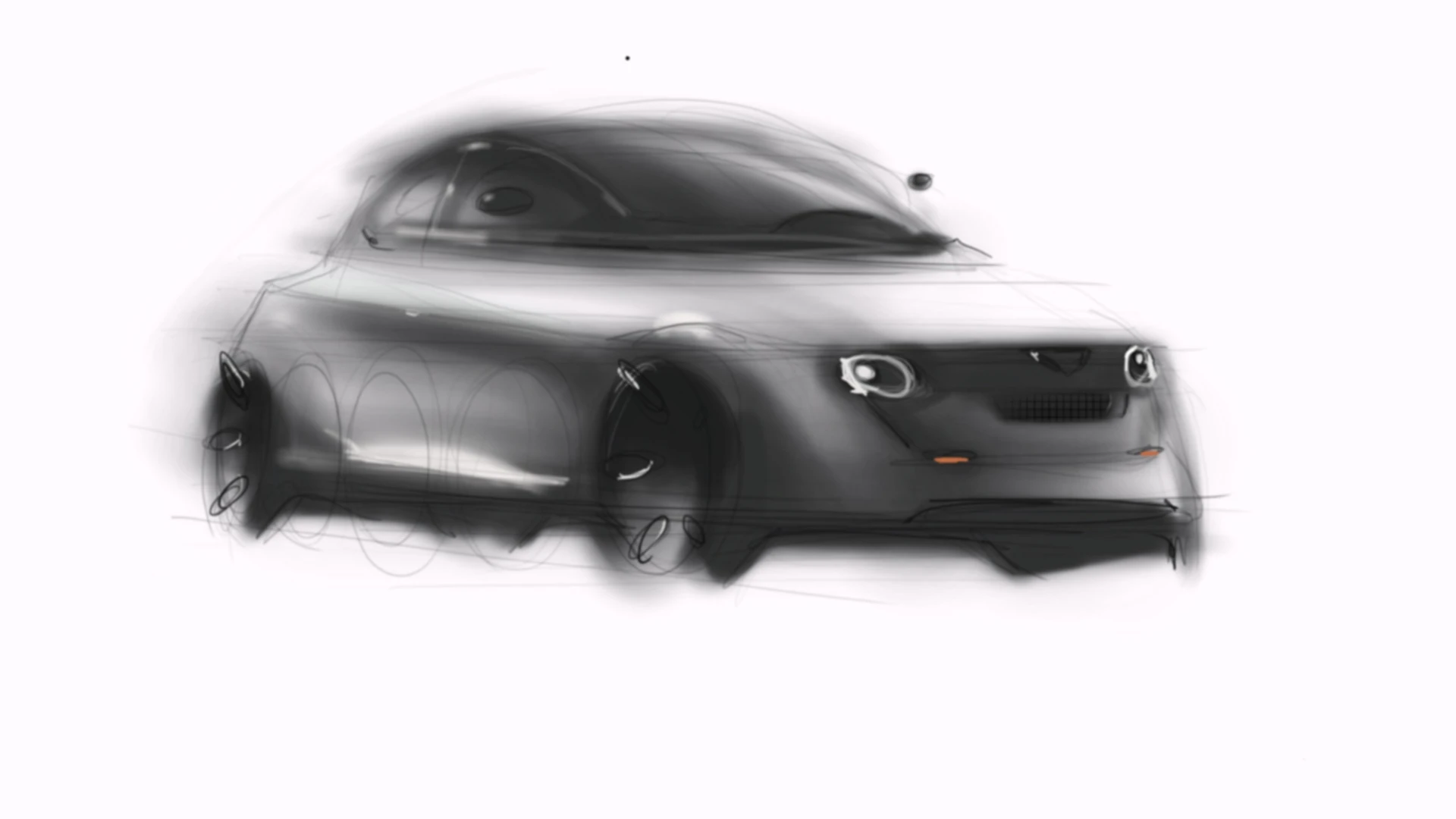
The body is taut and intentional. A fastback silhouette with haunches that reference European sports coupes without copying them. A continuous light strip traces the roofline, keeping the surface read clean under studio light and legible on city streets at night.
The cabin is designed around two states: driving and dwelling. When driving, the cockpit wraps around you, a floating landscape screen, minimal physical controls, and a squared steering wheel lower section pushing information forward and clutter backward. When parked, the same space opens up: the infotainment screen becomes a window into the ARCON app’s world rather than a navigation tool. Dark leather, textile inserts, a high centre console, material choices that age well and signal restraint over flash.
The companion app was designed in parallel with the vehicle, same brief, same constraints, same design language, because the ownership experience of a modern EV does not begin when you turn the key. It begins the night before, when you check the range. It continues in the morning, when the cabin is already cooled to your preference. It lives in the ten seconds you spend glancing at your phone while the car charges. ARCON treats those moments as design opportunities, not utility tasks.
The app’s information architecture is built around four mental states across a day of ownership: Is the car ready? Is it charging? Can I make this trip? What will it feel like when I get in? Four questions. Four screens. Nothing else. The result is an app that does not demand attention. It rewards brief, confident glances. Which is exactly how the physical car is designed to be driven.
Xiaomi demonstrated with the SU7 that the most defensible EV experience is one where the vehicle is an extension of a digital ecosystem the owner already trusts. ARCON explores that same principle from the design side: not what features can the app unlock, but how seamlessly the same design intelligence lives in both places simultaneously.

“The arc is not decoration. It is the project’s core design decision, made once, applied everywhere, from the headlight face of the vehicle to the charging ring on your phone.”



Electrip
Plan, charge, explore in one app. Electrip is a full-stack EV trip planning app built for Indian roads, combining intelligent range-aware routing, complete travel itineraries, and AI-powered trip refinement in one cohesive product.
View case →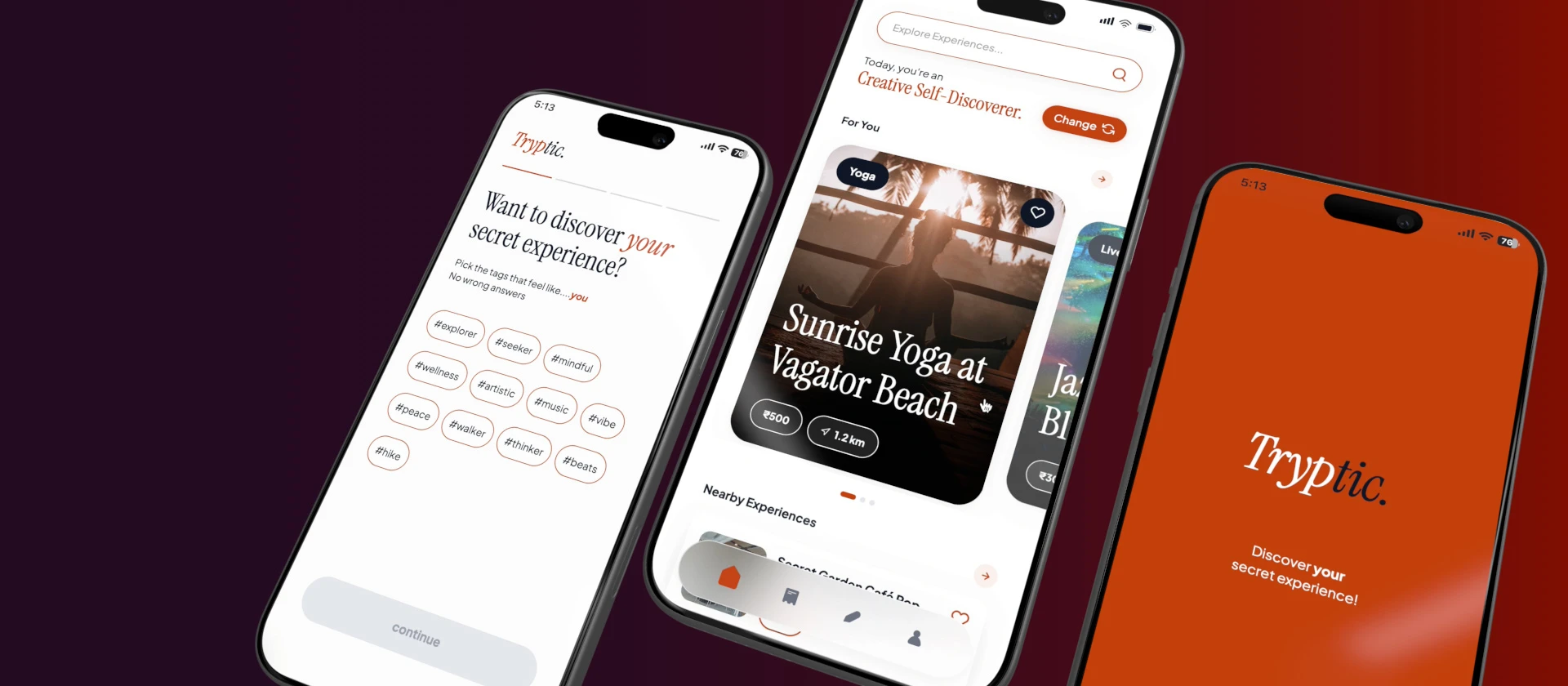
Tryptic
Tryptic isn’t another events app. It’s a discovery experience that starts by understanding you, a persona-based app that reads your instincts, your energy, your type, before showing you a single thing.
View case →
Bolt.Earth
User apps, companion apps, vehicle clusters and operator consoles for India’s largest EV charging network — one system spanning discovery, payments, and fleet operations.
View case →
STRATUM
STRATUM is a high-performance two-door electric GT coupe concept. Maximum clarity, minimum noise, in the car, in the cockpit, and in the app.
View case →
Sahayak
Sahayak is an organised digital system built to streamline the dispensation of critical information within India’s disability sector, and a dedicated job portal for people with disabilities, designed around the people who make it work: the helpline volunteer.
View case →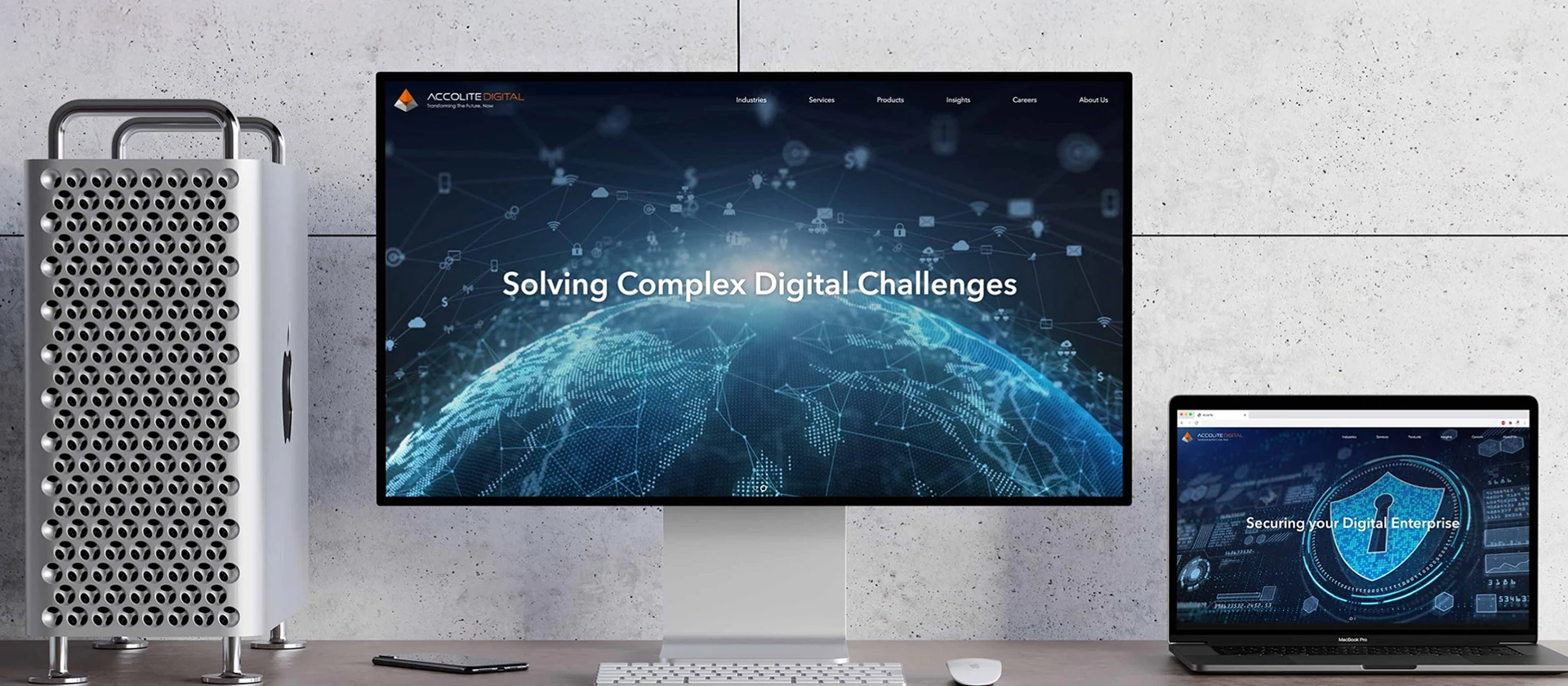
Bounteous (Accolite)
A complete brand overhaul for Bounteous (Accolite), now part of Bounteous, one of the world’s leading digital experience consultancies. From brand strategy and identity to website, collateral, and pitch decks that supported a landmark acquisition.
View case →

Aston Martin
A transportation design research project exploring the dualistic nature of industrial rigidity and fluid softness, inspired by the material language of the Indian sari, applied to a vehicle concept within Aston Martin’s design universe.
View case →